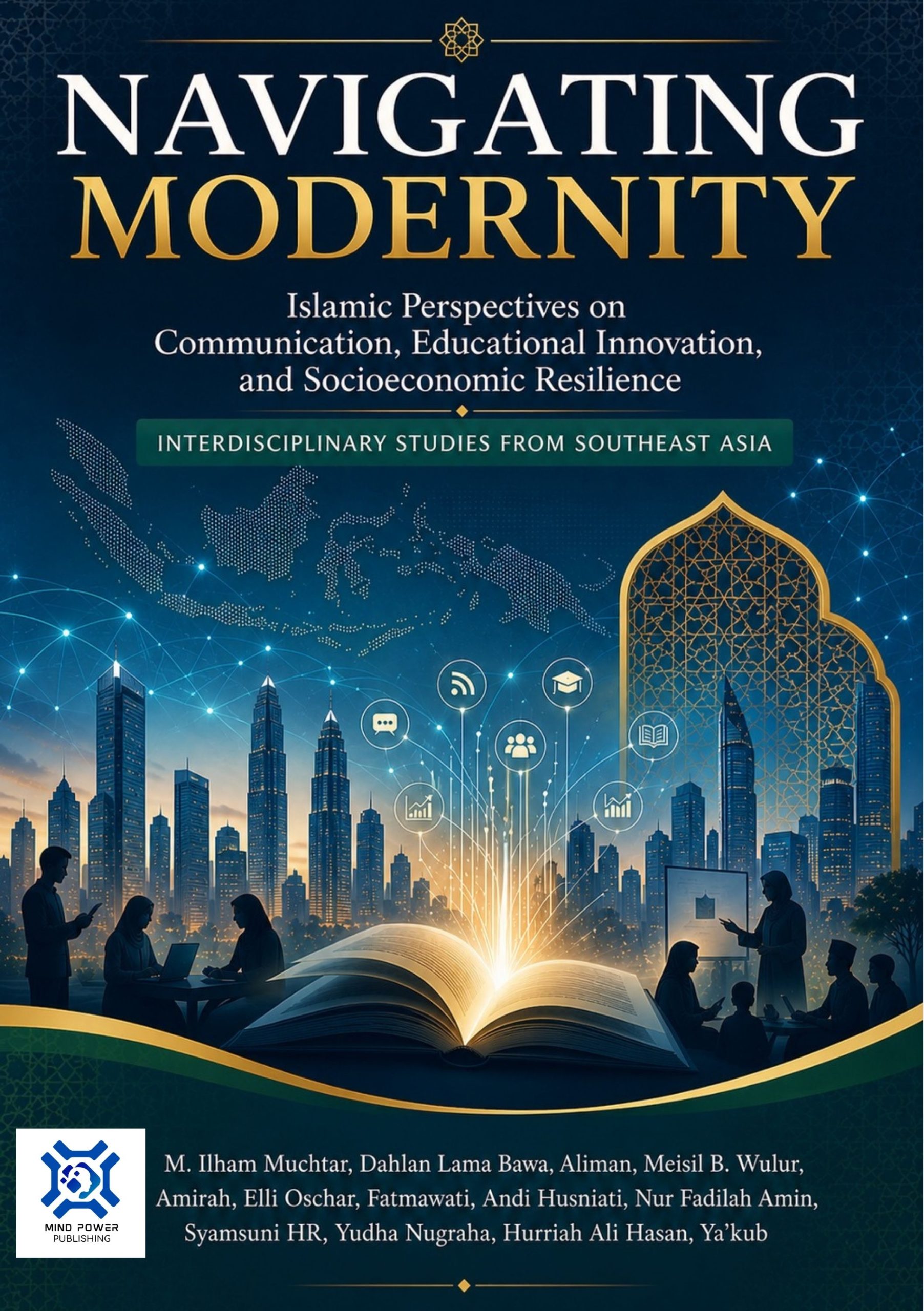
NAVIGATING MODERNITY: ISLAMIC PERSPECTIVES ON COMMUNICATION, EDUCATIONAL INNOVATION, AND SOCIOECONOMIC RESILIENCE INTERDISCIPLINARY STUDIES FROM SOUTHEAST ASIA
Starting: Rp60,000
Written by :
- Ilham Muchtar
- Dahlan Lama Bawa
- Aliman
- Meisil B. Wulur
- Amirah
- Elli Oschar
- Fatmawati
- Andi Husniati
- Nur Fadilah Amin
- Syamsuni HR
- Yudha Nugraha
- Hurriah Ali Hasan
- Ya’kub
Editor : Gina Havieza Elmizan, S.E, M.E, M.Si
Copy Editor : Rudi Harmanto, S.E., M.M.
eISBN: 978-629-7833-48-4
Alasan berbelanja di MInd Power Publishing
Description
Reviews (0)
Description
| Select Book | E-Book, Printed Book |
|---|---|
| SKU | N/A |
| Category | Book Published, religion |
The boycott movement against products affiliated with Israeli interests has become a prominent form of global solidarity in recent decades, especially among Muslims (Nugraha et al., 2024). Boycotts are not only seen as a political expression, but also as a manifestation of religious, humanitarian, and morality values. In the contemporary context, the emergence of social media has fundamentally changed the way Muslims express their solidarity (Rais, 2021). Digital platforms such as Twitter, Instagram, Facebook, and TikTok have become the main arena in disseminating information, calls for boycotts, and narratives of justice for the Palestinian people. This phenomenon reflects the transformation from conventional action to a transnational and participatory digital movement.
From a philosophical perspective, this movement is rooted in the concepts of al-ukhuwwah al-Islāmiyyah (Islamic brotherhood) and al-maslahah al-‘āmmah (common good) which are the basic principles in Islamic teachings (Wisesha & Na’im, 2025). Solidarity with the oppressed, especially those who are colonized and experiencing systemic oppression such as in Palestine, is part of the implementation of the values of faith and collective responsibility. In the dimension of fiqh, the act of boycott can be understood as part of tadbīr maqāṣid al-sharī’ah, which is a strategy to protect religion, soul, property, intellect, and honor. Therefore, the boycott movement through social media is not just a political act, but also has a strong normative justification within the framework of Islamic law (Anwar, 2020).
Reviews (0)
Leave a Reply
You also like

BASICS OF HEALTH SCIENCES
Starting: Rp45,000 Select options This product has multiple variants. The options may be chosen on the product page
STRATEGIC MANAGEMENT IN PUBLIC SERVICE
Starting: Rp45,000 Select options This product has multiple variants. The options may be chosen on the product page
GENERAL BIOLOGY : PRINCIPLES AND EXPLORATION
Starting: Rp55,000 Select options This product has multiple variants. The options may be chosen on the product page
UNLOCKING WEED POTENTIAL: FROM ENEMY TO RESOURCE
Starting: Rp46,000 Select options This product has multiple variants. The options may be chosen on the product page
FINANCIAL MANAGEMENT FOR BUSINESS SUCCESS
Starting: Rp45,000 Select options This product has multiple variants. The options may be chosen on the product page
Basics Of Business Management
Starting: Rp45,000 Select options This product has multiple variants. The options may be chosen on the product page
Reviews
There are no reviews yet.